Articles in this Volume

Research Article Open Access
A survey on text-driven visual generation: advances, frameworks, and future directions
Article thumbnail
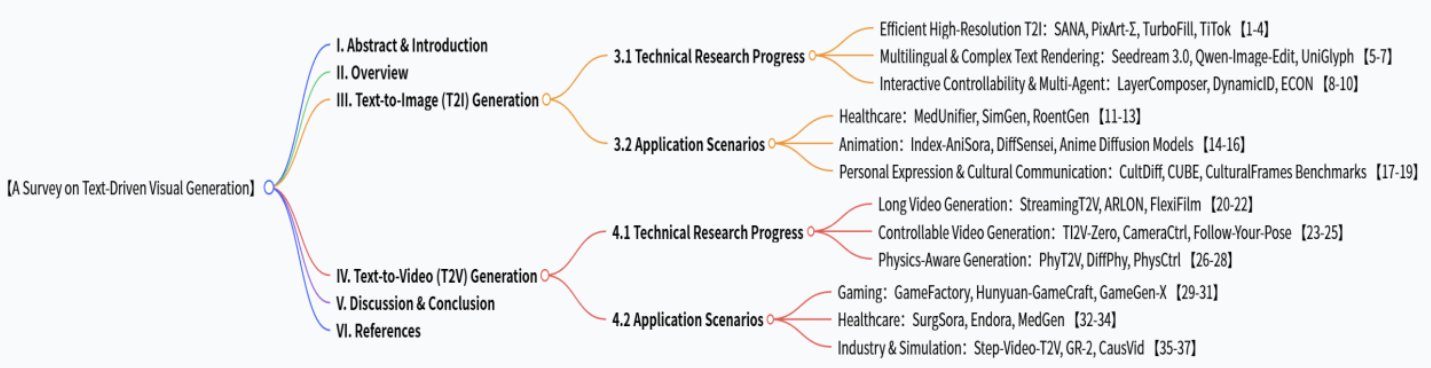
After DDPM outperformed GANs, diffusion models have evolved into the backbone of text-guided visual generation, with Stable Diffusion and DALL·E 2 alleviating key technical constraints. Despite remarkable advances in T2I and T2V tasks, critical gaps remain unaddressed. This paper conducts a systematic review of diffusion-based T2I and T2V technologies, synthesises the latest advances in related technologies, and proposes a “Technical Module-Application-Evaluation” framework to link technical breakthroughs with real-world applications. It also highlights under-researched fields and corresponding evaluation benchmarks, offering an integrated technical landscape to guide the equitable and reliable industrialisation of text-driven visual generation technologies.
Show more
Read Article PDF
Cite
Research Article Open Access
Comparative study on the binding of several per- and Polyfluoroalkyl Substances (PFAS) to the G Protein-coupled Estrogen Receptor (GPER) using molecular docking technology
Article thumbnail
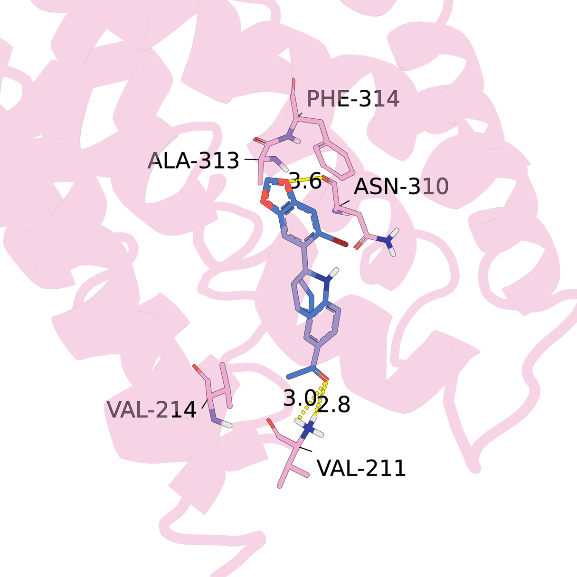
Per- and polyfluoroalkyl substances (PFAS) constitute a class of persistent organic pollutants with estrogen-disrupting effects. The molecular mechanism underlying their mediation of rapid non-genomic signaling pathways through the G protein-coupled estrogen receptor (GPER) remains incompletely elucidated. This study selected three representative PFAS—perfluorooctane sulfonate (PFOS), perfluorooctanoic acid (PFOA), and perfluorobutyric acid (PFBA)—based on the following criteria: PFOS and PFOA are the most ubiquitous traditional long-chain PFAS in the environment, characterized by potent bioaccumulative potential, while PFBA, as a representative short-chain PFAS, is widely used as a substitute for long-chain PFAS. Molecular docking techniques were employed to simulate and compare the interactions between these three PFAS and the GPER-specific agonist G1 with the receptor. The results indicated the following binding affinity order for ligands with GPER: G1 (-7.26 kcal/mol) > PFOS (-6.09 kcal/mol) > PFOA (-5.48 kcal/mol) > PFBA (-4.45 kcal/mol). Binding mode analysis revealed that PFOS exhibits the highest binding affinity due to its sulfonate group forming salt bridges and multiple halogen bonds. In contrast, PFOA and PFBA primarily engage in hydrophobic interactions and halogen bonds, with their binding affinity diminishing as the perfluorinated carbon chain length decreases.
Show more
Read Article PDF
Cite
Research Article Open Access
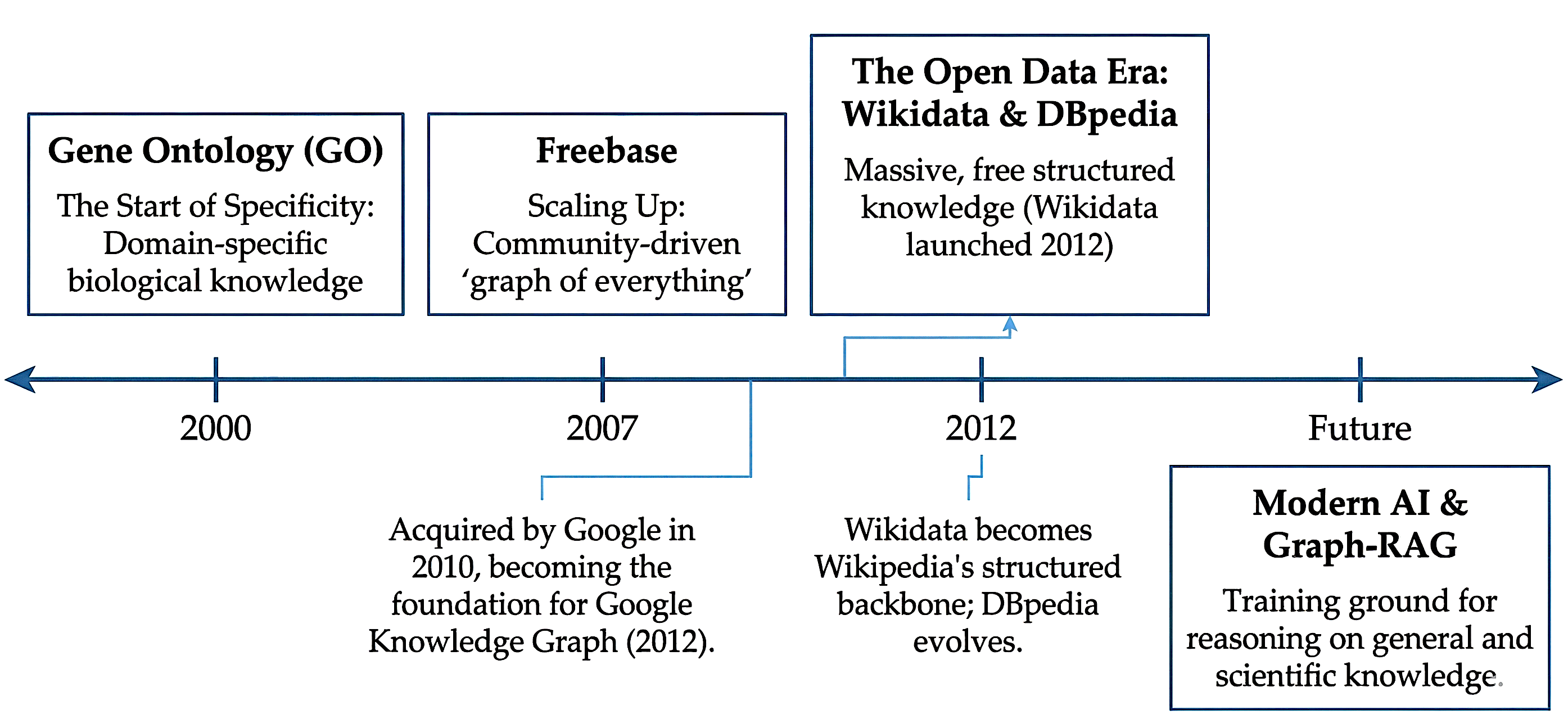
A comprehensive survey of knowledge Graph-Augmented Generation (Graph-RAG) for trustworthy large language models
Article thumbnail
Large Language Models (LLMs), which are capable of generating diverse expressions or reasoning paths, are fundamentally limited by their reliance on Parametric Memory and hence suffer from the 'hallucination' problem. That is, LLMs are capable of generating false yet plausible statements that are not grounded in reality, which is problematic for scientific and clinical use. A popular solution for alleviating this problem is the retrieval-augmented generation (RAG) technique. However, the retrieved sources are still large passages of semi-unstructured documents, and rigorous, verifiable, and logically coherent reasoning processes are still lacking. In this review, we summarise the latest progress in the direction of Knowledge Graph Enhanced Generation (Graph-RAG) as an attempt to achieve rigorous, verifiable, and logical reasoning processes using structured retrieval sources. We design a computation framework to provide a comprehensive taxonomy, classifying Graph-RAG methods into three areas: Graph Indexing, Graph Guided Retrieval, and Graph Enhanced Generation. We also discuss in depth the potential future directions for Graph-RAG, with an emphasis on moving beyond simple retrieval towards causal graph reasoning and actionable graphs. Finally, we present the main challenges in scaling Graph-RAG and its evaluation protocols, and conclude that Graph-RAG is a critical step toward trustworthy AI.
Show more
Read Article PDF
Cite
Research Article Open Access
A review of path tracking control methods for wheeled mobile robots
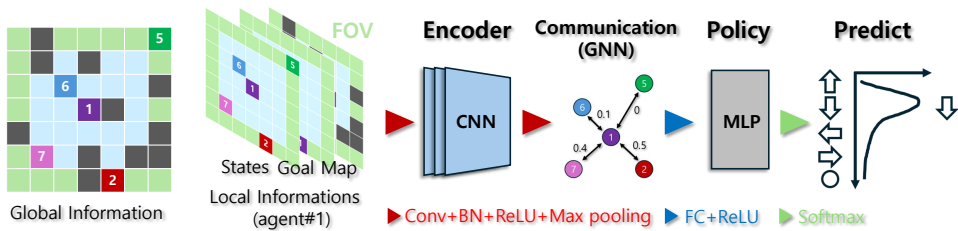
With the rapid advancement of technology, wheeled mobile robots have been increasingly widely applied in industrial production, logistics transportation, service sectors, and even daily life. Trajectory tracking accuracy is critical for achieving autonomous navigation and efficient operations. Traditional PID (Proportional-Integral-Differential control) controllers often exhibit limited tunability and inadequate disturbance rejection capabilities when dealing with system nonlinearities and external disturbances. This paper systematically reviews the research progress in path tracking control for wheeled mobile robots over the past five years, drawing on existing literature and empirical data. First, based on kinematic models, existing methods are categorized into four major categories: “classical PID-based”, “intelligent PID-based,” “Model Predictive Control (MPC)-based,” and “data-driven.” Their research advancements in tracking accuracy and disturbance rejection capabilities are analyzed. Through the classification and synthesis of relevant research, the paper identifies bottlenecks including complex ground disturbances and dynamic target tracking. It highlights that improvements in PID control primarily proceed along three directions: adaptive parameter tuning to enable automatic adjustment; intelligent algorithm fusion to enhance processing capabilities while maintaining simplicity; and enhanced disturbance rejection capabilities to guarantee reliability in practical applications. This review provides a roadmap for subsequent research and engineering selection.
Show more
Read Article PDF
Cite
Research Article Open Access
Research status and application scenario expansion of unstructured big data analysis technology
In the context of the profound evolution of the big data era, unstructured big data has become the main body of data resources, and its value extraction capability is directly related to the intelligent transformation process of all industries. This paper focuses on the processing and analysis technologies of unstructured big data, systematically reviewing the research status and expansion directions of application scenarios in this field. Research findings indicate that while artificial intelligence and cloud computing technologies have driven a revolutionary leap in processing capabilities, this field still faces a core contradiction: a significant gap exists between the fragmented state of key technologies and the end-to-end solutions required by real business, compounded by the prevalent data quality shortcomings, which together constitude the main obstacles to value realization. Therefore, through the literature analysis method, this paper summarizes existing technologies and application practices, and proposes a four-layer integrated framework centered on scenario-driven and intelligent orchestration from the two dimensions of technical integration architecture and scenario integration. The objective is to provide theoretical references and practical guidance for building efficient and implementable intelligent solutions for unstructured data.
Show more
Read Article PDF
Cite