Articles in this Volume

Research Article Open Access
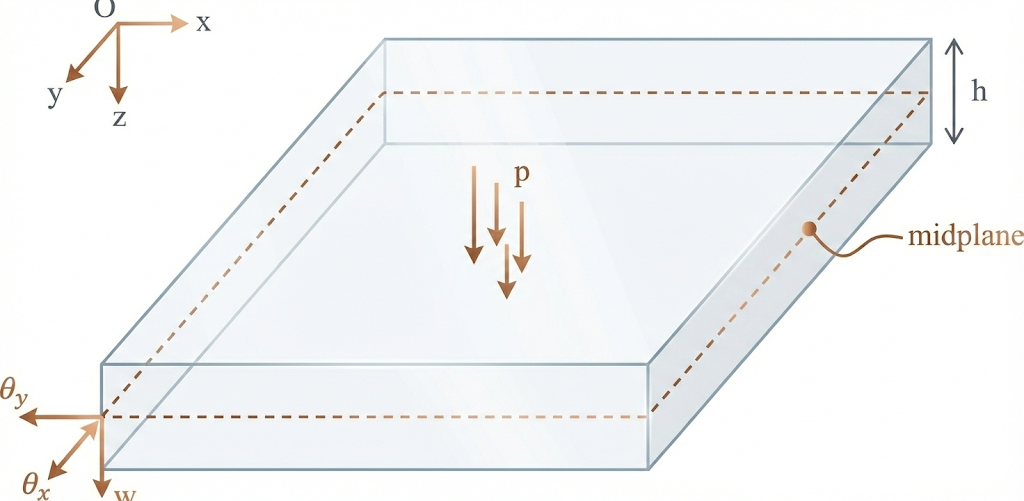
Topology optimization of plate based on the Reissner-Mindlin theory
Article thumbnail
Current topology optimization of Reissner-Mindlin plates faces dual challenges: the inaccuracy of global stress aggregation in capturing peak stresses and the numerical instability caused by shear locking. This study proposes a rigorous framework that bypasses stress aggregation by enforcing local stress constraints directly via an Augmented Lagrangian (AL) method. To ensure physical fidelity across varying plate thicknesses, we introduce a locking-free polygonal finite element formulation. This approach constructs an assumed shear strain field along element edges, effectively eliminating locking phenomena without relying on reduced integration. The optimization scheme further integrates a vanishing constraint treatment to resolve singularity in low-density regions, with sensitivities computed efficiently via adjoint analysis. Numerical benchmarks demonstrate that the proposed method delivers superior accuracy in peak stress control and robust convergence for both thin and thick plates, offering a scalable solution for stress-critical engineering designs.
Show more
Read Article PDF
Cite
Research Article Open Access
A gentle introduction to approximation fork-core/coreness: a mathematically-oriented survey of algorithms and error bounds
The survey presents an overview of several algorithms associated with the approximation ofk-core decomposition, and this survey aims to serve as a gentle introduction for students majoring in mathematics to gain an understanding of hypergraph. Due to their unique mathematical structure, hypergraphs have become good modeling tools for capturing multi-way relationships in sophisticated systems. Mathematical techniques play an important role in thek-core approximation by offering theoretical foundations and guaranty. Many of them are utilized —– such as probabilistic bounds, structural constraints, inequations, and invariants —– in order to design scalable and stable approximation algorithms. This survey reviews three recent algorithms, each of them representing various mathematical thought and different methodological paradigms, including parallel, stream computation, and dynamic approximation. In addition, the survey highlights that algorithms can still be improved and it is meaningful to find a deeper understanding of the stability and limiting behaviors ofk-core structures.
Show more
Read Article PDF
Cite
Research Article Open Access
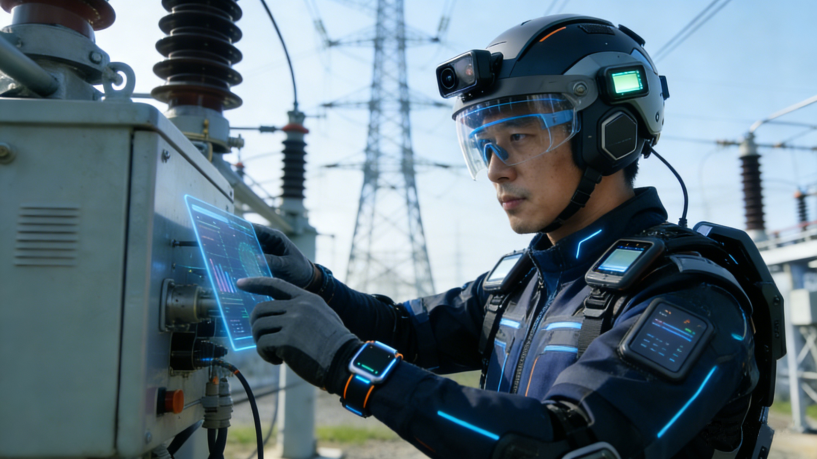
Research and exploration of a panoramic situation-aware embodied intelligent wearable system
Article thumbnail
In response to the core limitations of traditional smart wearable devices—namely passive data acquisition, imbalanced functional integration, and insufficient human–machine collaboration—this study deeply integrates embodied intelligence with wearable technologies and proposes a panoramic situation-aware embodied intelligent wearable system for high-risk operations, medical monitoring, and elderly care. A multimodal fusion technical architecture is adopted, following the pathway of "active perception–dynamic decision-making–natural interaction," thereby upgrading wearable systems from "tool-level data acquisition" to "partner-level intelligent collaboration." Application results demonstrate that the system reduces accident rates in electric power operations by 73%, increases the blood glucose compliance rate among diabetic patients by 42%, and shortens fall response time for elderly individuals living alone to within 20 seconds.
Show more
Read Article PDF
Cite
Research Article Open Access
Mechanisms, simulation methods, and application analysis of carrier transport properties in doped semiconductors
Article thumbnail
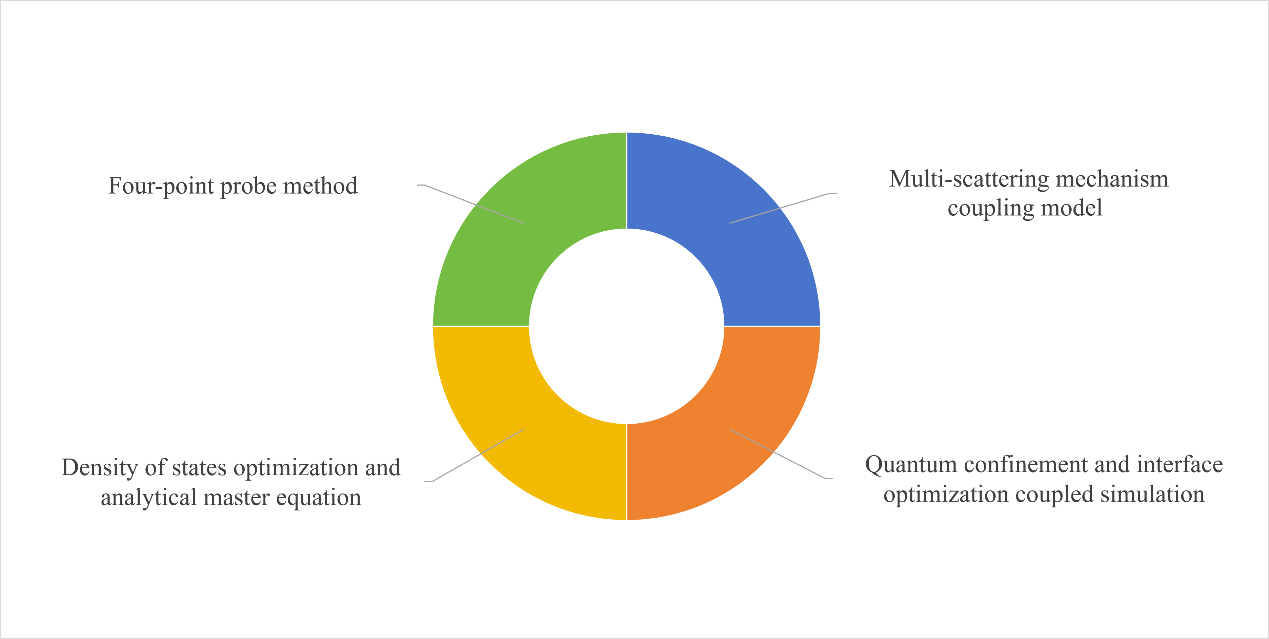
The semiconductor industry has evolved through multiple generations, with doping serving as a core approach to modulate semiconductor performance. It directly determines the key performance of electronic and energy devices, and its regulatory mechanisms, simulation methods, and applications have long been research focuses of academia. Clarifying the carrier transport mechanisms in doped semiconductors is crucial for promoting the continuous advancement of devices. This study focuses on the mechanisms and applications of carrier transport in such materials, employing literature analysis, case study, and comparative analysis methods. It systematically summarizes three core regulatory rules for semiconductors: the modulation of scattering mechanisms in traditional wide-bandgap inorganic semiconductors, quantum confinement and interface characteristics of ultra-wide-bandgap two-dimensional semiconductors, and density of states optimization in organic semiconductors. Additionally, this paper sorts out the applicable scenarios and multi-field applications of the relevant technologies, refines the cross-system carrier transport theory, and provides a comprehensive and practical reference for the design of various semiconductor devices.
Show more
Read Article PDF
Cite
Research Article Open Access
A review of In-Memory Computing with non-volatile memory: challenges and opportunities
Article thumbnail
Traditional von Neumann architectures suffer from severe energy and latency overheads due to intensive data movement between memory and processing units. In-Memory Computing (IMC) integrates computation within memory arrays, greatly mitigating this bottleneck. This paper provides a comprehensive review of IMC principles, implementations, and challenges across SRAM, DRAM, and non-volatile memories (NVMs) such as RRAM, MRAM, and PCM. We summarize architectural advances, device-level constraints, and system-level opportunities, with emphasis on the emerging class of resistive NVM-based IMC accelerators. Furthermore, we highlight engineering trade-offs, real-world application scenarios, and current industrial standardization efforts, offering guidance toward large-scale deployment of IMC technologies.
Show more
Read Article PDF
Cite
Research Article Open Access
Enhancing agency and spatial reconstruction: the transformative impact of AR on artistic creation—A systematic literature review
Article thumbnail
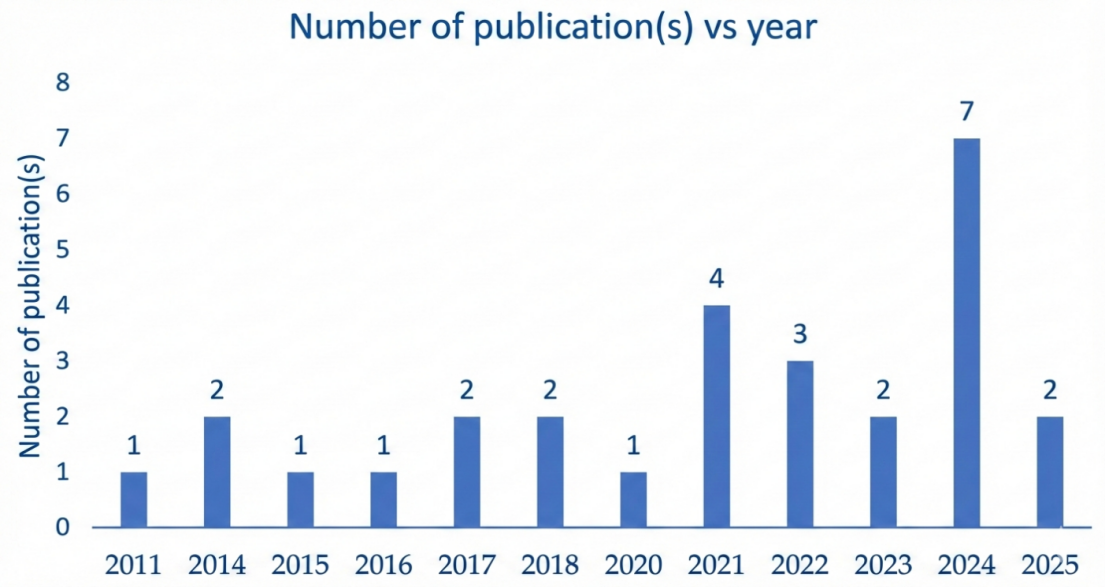
With the rapid global advancement of human-computer interaction technology and the continuous development of augmented reality (AR), its impact on artistic creation has significantly expanded. This study explores, through a systematic literature review, how AR technology has transformed contemporary art practices and the technological logic underlying this transformation. A total of 28 core articles published between 2011 and 2025 were analyzed, revealing the technological evolution of AR from early "image-triggered" to "spatial-aware" approaches. The findings indicate that "no-code" tools, such as Adobe Aero, Instagram filters, and WebAR, have significantly lowered the barriers to artistic creation, expanded creative agency, and transformed viewers from passive appreciators into co-creators. In addition, AR, through spatial reconstruction, multi-sensory integration, and "temporal overlap" mechanisms, transforms artistic creation from a static physical space into a dynamic, participatory hybrid digital-physical space. This review concludes that AR, as an augmentation technology, has fundamentally changed the creative logic and aesthetic experience of contemporary art. The paper also outlines future directions for AI-driven real-time AR art and discusses emerging legal and ethical challenges.
Show more
Read Article PDF
Cite
Research Article Open Access
Research on low-carbon design and operational adaptation of urban stadium buildings under the "carbon neutrality" goal
Article thumbnail
To address the core contradiction of "low-carbon design yet high-carbon operation" in urban stadiums under the "carbon neutrality" goal, this study systematically explores the adaptation logic between low-carbon design and operation of stadiums from a full-life-cycle perspective, drawing on the practice of venues for the 15th National Games in the Guangdong-Hong Kong-Macao Greater Bay Area. The research indicates that the low-carbon transformation of stadiums requires constructing a collaborative system of "low-carbon design gene implantation and operational efficiency conversion": Existing stadiums should adopt a differentiated renovation strategy of "carbon footprint accounting and technology adaptation"; new stadiums need to strengthen the integrated application of bio-based materials, prefabricated technology, and photovoltaic systems; during the operation phase, efficiency optimization should be achieved through intelligent management and control, functional diversification, and resource recycling. Additionally, a two-way feedback mechanism should be established via digital twin technology, full-cycle standards and incentive systems improved, and an innovative revenue model of "energy services + space operation" developed to attain the goal of sustainable urban architecture. This study provides technical pathways for urban stadiums to achieve full-life-cycle carbon emission reduction and offers references for the carbon neutrality transformation in the construction sector.
Show more
Read Article PDF
Cite
Research Article Open Access
A review of high-k dielectric materials for power electronic devices
Wide-bandgap semiconductors, represented by SiC and GaN, are central to the advancement of electronics technology. However, their gate dielectric engineering faces significant challenges. This paper employs a literature review and case studies to systematically examine the progress and future directions in high-k dielectric materials. The study traces their evolution from HfO₂ and Al₂O₃ to composite multilayers, elucidating the application mechanisms of key processes such as atomic layer deposition. Furthermore, the review demonstrates the applications of high-k dielectrics in enhancing SiC MOSFET gate oxide reliability and enabling low-voltage driving for flexible electronics. High-k dielectrics are critical in overcoming performance bottlenecks and advancing electric vehicles and smart grids. Future research should focus on interface defect control and on integration with ultra-wide bandgap semiconductors.
Show more
Read Article PDF
Cite
Research Article Open Access
YOLOv12-enhanced: multi-scale attention and edge information fusion for industrial valve nozzle detection
Article thumbnail
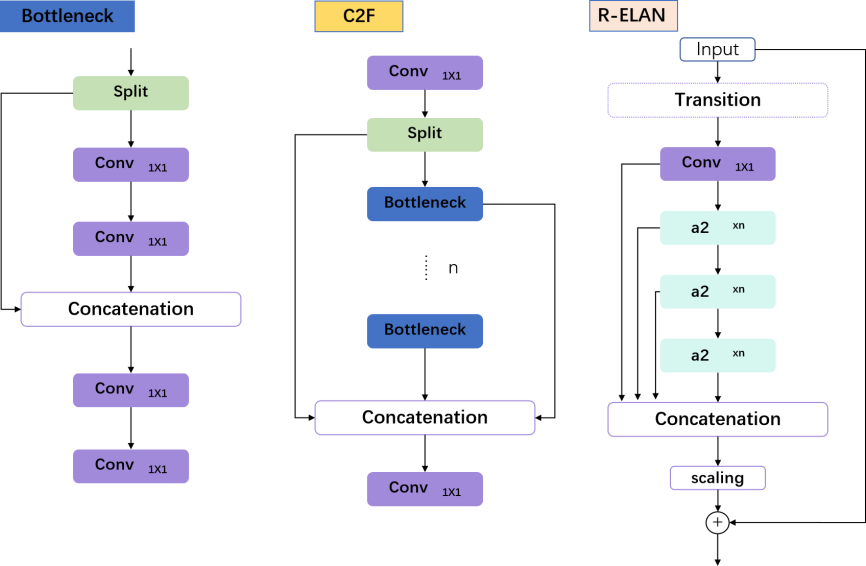
Accurate valve nozzle detection is an important component of industrial visual inspection systems; however, structural complexity, scale variation, illumination fluctuation, and partial occlusion remain challenging factors that affect detection stability. This study presents YOLOv12-Enhanced, a refined single-stage detection framework developed for industrial valve nozzle scenarios. The proposed approach incorporates three architectural modifications: a RepViT backbone to enhance hierarchical feature representation through structural re-parameterization and global–local modeling, an SPPF module combined with C2PSA attention to strengthen multi-scale contextual feature extraction, and a Global Edge Information Fusion (GEIF) module to integrate shallow edge information with deep semantic features for improved boundary alignment. Experimental evaluation on the Pascal VOC dataset shows that the proposed model achieves 71.0% mAP50 and 54.4% mAP50–95 under identical training conditions, exceeding the baseline YOLOv12n. Ablation experiments further demonstrate that each module contributes incremental performance gains. Evaluation on a self-constructed valve nozzle dataset consisting of 500 real industrial images indicates stable detection behavior under varying illumination and partial occlusion conditions. The experimental findings suggest that the proposed structural refinements provide a balanced enhancement in feature representation and localization precision while maintaining comparable computational complexity.
Show more
Read Article PDF
Cite
Research Article Open Access
Handwritten digit classification with convolutional neural network
Article thumbnail
In this project, we develop a convolutional neural network (CNN) to classify handwritten digits from the MNIST dataset, a widely used benchmark in computer vision. Unlike traditional image-processing pipelines that rely on engineered features, CNNs automatically learn hierarchical representations directly from raw pixel data. Our model consists of two convolutional layers, max pooling, dropout for regularization, and two fully connected layers. Trained for five epochs using the Adadelta optimizer with learning rate decay, the network achieves a test accuracy of 98.92%. These results demonstrate that even a relatively small CNN can achieve strong performance on MNIST with minimal tuning.
Show more
Read Article PDF
Cite