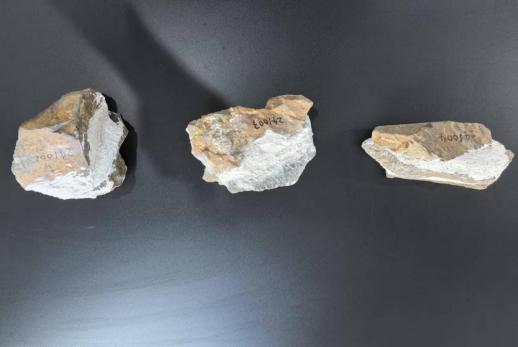
The ancient sea dikes of the Qiantang River have a history spanning more than 400 years since their construction in the 21st year of the Jiajing reign of the Ming Dynasty (1542). Despite centuries of exposure to wind, rain, and tidal waves, as well as extensive damage caused by modern human activities, more than 40 kilometers of these historic sea dikes remain in service on the front line of flood control, continuing to play a vital role. Owing to their long history, the ancient sea dikes have also fostered a rich body of local folk traditions and accumulated profound cultural significance for the communities along both banks of the estuary. They therefore represent not only important hydraulic engineering works but also valuable historical and cultural heritage. With the passage of time and changes in hydrological and topographical conditions, many of the surviving ancient sea dikes have developed structural problems, including fractured facing stones and detached stone blocks. Consequently, reproducing traditional glutinous rice mortar using modern techniques and restoring the ancient sea dikes in accordance with cultural heritage conservation standards is of great significance for preserving historical and cultural heritage, promoting water-related culture, and maintaining the engineering functions of these historic structures. This study focuses on the ancient fish-scale stone sea dike along the Haining section of Jiaxing. Building upon previous studies and systematic analyses of ancient mortar samples, the composition of traditional glutinous rice mortar was analyzed and optimized. Through similarity tests, compressive strength tests, and field experiments, a glutinous rice mortar suitable for preliminary application in the restoration of ancient sea dikes was successfully developed. After repeated experimental verification, the optimal formulation was determined to consist of calcium hydroxide powder, calcium carbonate powder, gypsum powder, pregelatinized glutinous rice flour, a water-reducing agent, cellulose, and alum. The prepared mortar exhibited satisfactory bonding performance in similarity tests, making the bonded stone specimens difficult to separate. In compressive strength tests, the mortar generally achieved strengths exceeding 0.7 MPa. Field tests further demonstrated good resistance to hydraulic erosion and drying-induced cracking, indicating that the developed mortar has preliminarily met the requirements for practical application in sea dike restoration projects.